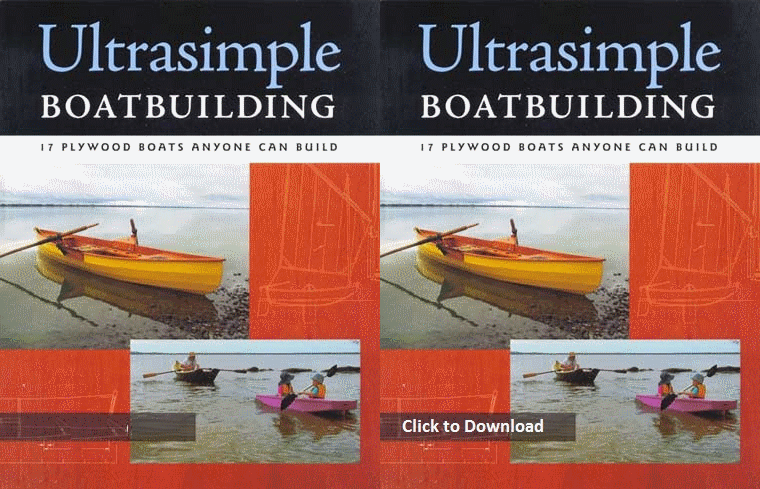
 freeeasycanoeplans.blogspot.com ```html
 Opening: Embark on a DIY Adventure – Building Your Own Gartside Boat! Are you dreaming of sailing the open waters? Gartside boat plans offer a fantastic opportunity to build your own vessel, tailored to your specific needs and preferences. This step-by-step guide will walk you through the process, from selecting your plans to launching your completed boat. Get ready for an exciting and rewarding journey into boatbuilding!
Step 1: Choosing Your Gartside Boat Plan Selecting the right plan is crucial. Consider your intended use: Will it be for day sailing, fishing, or longer voyages? Assess your skill level: Are you a beginner or an experienced woodworker? Gartside offers plans ranging in complexity. Determine your budget: More complex designs often require more materials and time. Think about size and storage: Ensure you have adequate space to build and store your boat. Once you've considered these factors, browse the Gartside website or catalog and carefully review the specifications of each plan. Pay close attention to the dimensions, materials list, and building methods.
Step 2: Gathering Materials and Tools With your plan selected, it's time to gather the necessary materials and tools. Wood: The plans will specify the type and quantity of wood needed. Source high-quality lumber from a reputable supplier. Fasteners: Screws, nails, and bolts are essential for assembling the boat. Use marine-grade fasteners to prevent corrosion. Adhesives: Epoxy resin is the standard adhesive for boatbuilding. Follow the manufacturer's instructions carefully. Fiberglass and Resin: Many Gartside plans call for fiberglass sheathing to provide strength and waterproofing. Tools: You'll need a variety of tools, including saws (circular saw, jigsaw, handsaw), drills, sanders, clamps, measuring tools, and safety equipment (goggles, gloves, dust mask). Organize your materials and tools in a well-lit and ventilated workspace.
Step 3: Building the Frame The frame provides the structure of the boat. Follow the plan meticulously: Accuracy is paramount. Cut the frame components: Use the dimensions provided in the plan to cut the frame pieces accurately. Assemble the frame: Use screws and epoxy to join the frame pieces together. Ensure the frame is square and true. Add stringers and chines: These longitudinal members add strength and shape to the hull. Constantly refer back to the plans to ensure proper alignment and construction.
Step 4: Planking the Hull Planking involves attaching the hull panels to the frame. Cut the planks: Measure and cut the planks according to the plan. Attach the planks: Use clamps, screws, and epoxy to attach the planks to the frame. Stagger the seams for added strength. Fair the hull: Once the planks are attached, use a hand plane and sander to fair the hull, creating a smooth and even surface. This process requires patience and attention to detail to achieve a fair and watertight hull.
Step 5: Fiberglassing (If Required) Fiberglassing protects the hull and adds strength. Prepare the surface: Sand the hull smooth and clean it thoroughly. Apply the fiberglass cloth: Lay the fiberglass cloth over the hull, overlapping the seams. Wet out the cloth with resin: Use a brush or roller to saturate the fiberglass cloth with epoxy resin. Remove air bubbles: Use a squeegee to remove air bubbles from the fiberglass. Apply additional coats of resin: Apply several coats of resin to build up the fiberglass thickness. Sand and fair the fiberglass to create a smooth, paintable surface.
Step 6: Interior Construction Once the hull is complete, you can start building the interior. Install bulkheads: Bulkheads provide structural support and divide the interior into compartments. Build bunks, seats, and storage: Customize the interior to suit your needs. Install systems: Install electrical wiring, plumbing, and other systems as required. Consider the functionality and ergonomics of the interior when designing the layout.
Step 7: Finishing and Painting Finishing and painting protect the boat and enhance its appearance. Sand the entire boat: Sand all surfaces smooth and prepare them for painting. Apply primer: Apply several coats of primer to seal the wood and provide a good base for the paint. Paint the boat: Apply several coats of marine-grade paint to protect the boat from the elements. Apply varnish (if desired): Apply varnish to brightwork (wood trim) to protect it and enhance its appearance. Follow the paint manufacturer's instructions for best results.
Step 8: Rigging and Launching The final steps involve rigging the boat and launching it. Install the hardware: Install cleats, winches, and other hardware. Rig the sails: Attach the sails to the mast and boom. Launch the boat: Carefully launch the boat into the water. Test sail: Take the boat out for a test sail to ensure everything is working properly. Celebrate your accomplishment! You've built your own boat!
Conclusion: Enjoy the Fruits of Your Labor! Building a Gartside boat is a challenging but incredibly rewarding experience. You've not only gained valuable skills but also created a vessel that you can be proud of. Now it's time to set sail and enjoy the open water, knowing that you built your boat with your own two hands. Happy sailing!
``` Paul Gartside Boat Plans
 plywoodboatmaking.blogspot.com
 Paul Gartside Boat Plans
 designofboathull.blogspot.com
 Gartside Boat Plans
freeeasycanoeplans.blogspot.com  boatplansaluminums.blogspot.com
  woodenboat.com
  woodenboat.com
  projaker.com
  www.freeimages.com
  hd.tousecurity.com
  lovepik.com
  pixabay.com
  cubaset.ru
  www.ssbm.ch
  www.timeout.com
  buildbookbuzz.com
  fineboatplans.blogspot.com
  aluminumboatplans.com
  aluminumboatplans.com
  theboatworks.com.au
  in.pinterest.com
  www.boatdesign.net
  storage.googleapis.com
  www.ancient-origins.net
  viking.style
  www.lovefromscotland.co.uk
  ian-cylkowski-dee4.squarespace.com
  www.lovefromscotland.co.uk
  www.theclassicarchives.com
  boatplansplywoodfreef.blogspot.com
  www.theclassicarchives.com
  xaydungso.vn
  diyjoy.com
  www.pinotspalette.com
  aluminumboatplans.blogspot.com
  aluminumboatplans.com
  boatplansfrombasic.blogspot.com
  hative.com
  www.stylemotivation.com
  www.domino.com