Selasa, 30 September 2025

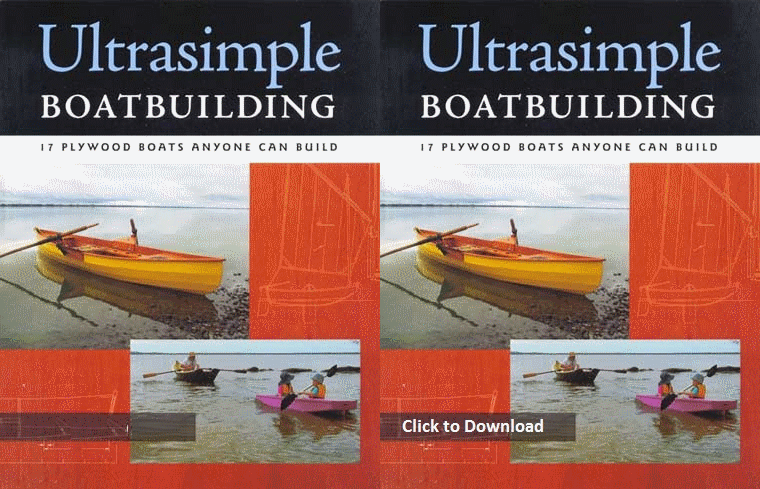
59+ Free Boat Plans Pdf Free Download

The 50 best free things to do in nyc www.timeout.com

Opening: A Journey into DIY Boat Building Embarking on a DIY boat building project is a rewarding challenge. This guide will walk you through the process of creating a simple boat, providing step-by-step instructions to help you navigate the waters of boat construction. We'll focus on a small, easily manageable design suitable for beginners.
Step 1: Gather Your Materials and Tools Before you begin, you'll need to assemble all the necessary materials and tools. This will save you time and frustration later on. Here's a basic list:
  • Plywood: Marine-grade plywood is ideal, but exterior-grade will also work for a less demanding project. Determine the thickness based on the boat's size and planned use (check plans for specs).
  • Epoxy Resin and Hardener: Essential for waterproofing and bonding the wood.
  • Fiberglass Cloth: Adds strength and durability, especially to seams and joints.
  • Wood Screws: Stainless steel or coated screws are recommended to resist corrosion.
  • Wood Glue: Waterproof wood glue for extra bonding strength.
  • Measuring Tape: Accurate measurements are crucial.
  • Saw: A circular saw or jigsaw for cutting the plywood.
  • Drill: For drilling pilot holes and driving screws.
  • Sandpaper: Various grits for smoothing surfaces.
  • Clamps: To hold pieces together while the glue dries.
  • Mixing Sticks and Cups: For mixing epoxy resin.
  • Safety Glasses and Gloves: Essential for personal protection.
  • Paint or Varnish: For finishing and protecting the wood.
Step 2: Cutting the Plywood According to Your Boat Plans Carefully transfer the dimensions from your boat plan onto the plywood sheets. Use a pencil and a straight edge to mark the cutting lines. Double-check all measurements before cutting.
  • Cutting: Use a circular saw or jigsaw to cut out the plywood pieces. Follow the marked lines precisely. For curved pieces, a jigsaw is easier to maneuver.
  • Labeling: Label each piece clearly with its name (e.g., "Hull Side," "Bottom Panel") according to the boat plans. This will prevent confusion during assembly.
Step 3: Assembling the Hull This is where the boat starts to take shape. Follow the plans closely to ensure correct alignment.
  • Joining Panels: Apply waterproof wood glue to the edges of the plywood panels that will be joined. Use clamps to hold the pieces together tightly while the glue dries. Allow sufficient drying time as specified by the glue manufacturer.
  • Screwing: After the glue has dried, reinforce the joints with wood screws. Drill pilot holes first to prevent the wood from splitting. Space the screws evenly along the joint.
  • Filleting: Mix epoxy resin with a filler material (such as wood flour or colloidal silica) to create a thickened epoxy mixture. Apply this mixture along all the seams and joints to create smooth, rounded fillets. Fillets add strength and prevent water from seeping into the joints.
Step 4: Fiberglassing the Seams Fiberglassing the seams provides extra strength and makes the boat waterproof.
  • Applying Epoxy: Prepare a batch of epoxy resin and hardener according to the manufacturer's instructions. Apply a thin, even coat of epoxy to the seams and surrounding areas.
  • Laying Fiberglass Cloth: Carefully lay the fiberglass cloth over the wet epoxy. Smooth out any wrinkles or air bubbles using a plastic spreader or a squeegee.
  • Second Epoxy Coat: Apply a second coat of epoxy over the fiberglass cloth, ensuring that the cloth is completely saturated. Again, smooth out any imperfections.
  • Sanding: Once the epoxy has cured, sand the fiberglassed seams to create a smooth, even surface. Start with a coarse grit sandpaper and gradually move to finer grits.
Step 5: Adding Interior Components (Seats, Frames, etc.) Install any interior components such as seats, frames, or thwarts according to your boat plans.
  • Cutting and Fitting: Cut the components to the required dimensions and test-fit them in place.
  • Gluing and Screwing: Glue and screw the components to the hull, ensuring they are securely attached.
  • Finishing: Apply epoxy and fiberglass to any joints or seams around the interior components for added strength and waterproofing.
Step 6: Finishing and Painting The final steps involve finishing the boat and applying a protective coating.
  • Sanding: Sand the entire boat to create a smooth surface for painting or varnishing.
  • Painting/Varnishing: Apply several coats of marine-grade paint or varnish to protect the wood from the elements. Follow the manufacturer's instructions for application and drying times.
Conclusion: Your DIY Boat is Ready for the Water Congratulations! You have successfully built your own boat. Before launching, carefully inspect all the seams and joints to ensure they are watertight. Remember to always wear a life jacket and follow safe boating practices. Enjoy your new creation on the water!

3840×2160 Images Free Download

3840×2160 images free download www.pixelstalk.net

The 50 Best Free Things To Do In Nyc

The 50 best free things to do in nyc www.timeout.com

When "free" Is Not Actually Free

When "free" is not actually free lowey.com

Minggu, 28 September 2025

44+ Nexus Boat Plans

Boat plans & kits www.woodenboat.com

Opening: Building Your Own Nexus Boat So, you're thinking about building your own boat? That's fantastic! A Nexus boat, known for its stability and versatility, is a great choice for a DIY project. This guide will walk you through the process, step-by-step, from gathering your materials to launching your finished vessel. Be prepared for a significant time investment and dedication to detail, but the reward of sailing in a boat you built yourself is unmatched.
Step 1: Choosing Your Plans Before you even think about buying lumber, you need a solid set of plans. Nexus boat plans are readily available online, often offering different sizes and configurations.
  • Research: Look for plans that match your skill level and desired use. Beginner plans might be simpler in design.
  • Source: Purchase reputable plans from a trusted supplier. Ensure they include detailed drawings, a materials list, and clear instructions.
  • Review: Thoroughly review the plans before buying any materials. Make sure you understand each step and the quantities of materials required.
  • Step 2: Gathering Materials and Tools Once you have your plans, the next step is to gather all the necessary materials and tools. This is a crucial step to prevent delays later on.
  • Lumber: Marine-grade plywood is often the material of choice for Nexus boats. Consult your plans for specific types and dimensions.
  • Epoxy Resin and Hardener: High-quality epoxy is essential for bonding and waterproofing.
  • Fiberglass Cloth: For added strength and durability, fiberglass cloth is typically applied to the exterior.
  • Fasteners: Use marine-grade screws, bolts, and nails that are resistant to corrosion.
  • Tools: You'll need a variety of tools, including a saw (circular saw, jigsaw), drill, sander, measuring tools, clamps, epoxy mixing supplies, and safety gear (gloves, mask, eye protection).
  • Step 3: Building the Hull The hull is the main body of the boat. This is usually the most time-consuming part of the project.
  • Frame Assembly: Construct the frame according to the plans. Accuracy is crucial at this stage to ensure the hull is symmetrical. Use temporary fasteners and clamps to hold the frame together while you check for alignment.
  • Planking: Attach the plywood planks to the frame, following the plans meticulously. Use epoxy and screws to secure the planks.
  • Seam Treatment: Apply epoxy filler to the seams between the planks and sand smooth. This will create a watertight seal.
  • Fiberglassing (Optional): Apply fiberglass cloth to the exterior of the hull, saturating it with epoxy resin. This will add significant strength and water resistance. Allow the epoxy to cure completely and then sand smooth.
  • Step 4: Interior Construction With the hull complete, you can move on to the interior. This includes features like seating, storage, and any other custom elements.
  • Bulkheads and Stringers: Install bulkheads for structural support and stringers to reinforce the hull.
  • Seating and Storage: Build and install any seating, storage compartments, or other interior features according to your plans.
  • Finishing: Sand and paint or varnish the interior surfaces for a clean and professional look.
  • Step 5: Deck Construction The deck provides a surface to walk on and helps to enclose the boat.
  • Deck Framing: Construct the frame for the deck, ensuring it aligns properly with the hull.
  • Deck Planking: Attach the plywood planks to the deck frame, using epoxy and screws.
  • Hardware Installation: Install any deck hardware, such as cleats, handrails, and hatches.
  • Finishing: Sand and paint or varnish the deck surface. Consider adding non-skid surfaces for safety.
  • Step 6: Finishing Touches and Launching The final steps involve adding the finishing touches and preparing the boat for launch.
  • Painting/Varnishing: Apply several coats of marine-grade paint or varnish to the entire boat to protect it from the elements.
  • Hardware Installation: Install any remaining hardware, such as the rudder, tiller, or motor.
  • Safety Equipment: Equip the boat with all necessary safety equipment, including life jackets, flares, and a first-aid kit.
  • Launching: Carefully launch the boat and test all systems to ensure they are functioning properly. Start with a calm water test before venturing into more challenging conditions.
  • Conclusion: Your DIY Nexus Boat Adventure Building a Nexus boat is a challenging but rewarding project. By following these steps and paying close attention to detail, you can create a boat that you can be proud of. Remember to prioritize safety throughout the process and enjoy the journey! Good luck and happy sailing!

    Boat Plans & Kits

    Boat plans & kits www.woodenboat.com

    Boat Plans For The 21' Nexus Dory

    Boat plans for the 21' nexus dory www.pinterest.com

    Boat Plans Nexus

    Boat plans nexus canoewithkayakpaddle.blogspot.com

    Kamis, 25 September 2025

    180+ Free Model Boat Plans Uk

    Latest action movies free online best sale bellvalefarms.com

    ```html
    Introduction: Building Your Own Model Boat So, you want to build a model boat? It's a rewarding hobby that combines craftsmanship, problem-solving, and a touch of nautical history. This guide will walk you through the steps of building a simple model boat from readily available materials. This project focuses on a static display model, not a functional one for water use.
    Materials You'll Need: Before you start, gather the following items. Having everything prepared will make the building process smoother and more enjoyable.
    • Balsa wood or basswood sheets (various thicknesses, depending on your design)
    • Craft knife or X-Acto knife with sharp blades
    • Cutting mat
    • Ruler or straight edge
    • Pencil
    • Wood glue (such as Titebond or Elmer's wood glue)
    • Sandpaper (various grits, from coarse to fine)
    • Clamps or masking tape
    • Paint (acrylic or enamel, your choice of colors)
    • Paintbrushes
    • String or thread (for rigging, if desired)
    • Optional: Small wooden dowels for masts, brass fittings for detailing
    Step 1: Planning Your Design The first step is to decide what kind of boat you want to build. Start with something simple, like a basic sailboat or a small fishing boat. Search online for "model boat plans" for inspiration or even free downloadable plans.
    • Choose a plan: Select a plan that suits your skill level. Simple, geometric designs are easier for beginners.
    • Scale the plan (if necessary): If you're using a scaled plan, make sure it's printed to the size you desire.
    • Understand the plan: Familiarize yourself with all the parts and how they fit together.
    Step 2: Cutting the Hull Pieces Now it's time to transfer your plan to the wood and start cutting.
    • Trace the parts: Carefully trace the hull pieces onto your balsa wood sheets using a pencil. Be precise!
    • Cut out the pieces: Use your craft knife and cutting mat to carefully cut out the hull pieces. Make multiple light passes rather than trying to cut through the wood in one go. This will give you cleaner cuts.
    Step 3: Assembling the Hull This is where your boat starts to take shape.
    • Dry fit: Before applying glue, dry fit all the hull pieces together to ensure they fit properly. Make any necessary adjustments with your craft knife or sandpaper.
    • Glue the pieces: Apply wood glue to the edges of the hull pieces and carefully assemble the hull. Use clamps or masking tape to hold the pieces together while the glue dries. Follow the glue manufacturer's instructions for drying time.
    Step 4: Shaping and Sanding the Hull Once the glue is dry, it's time to refine the shape of the hull.
    • Rough shaping: Use your craft knife or a small block plane to remove any excess wood and create the desired hull shape.
    • Sanding: Start with a coarse grit sandpaper to smooth out any rough edges and then gradually move to finer grits for a smooth finish. Be patient and sand in the direction of the wood grain.
    Step 5: Adding Details Now you can add details like the deck, cabin, and other features.
    • Cut and attach the deck: Cut a piece of balsa wood to fit the deck area and glue it in place.
    • Build the cabin (if applicable): Cut and assemble the cabin pieces according to your plan and glue them to the deck.
    • Add other details: Add any other details you desire, such as railings, windows, and hatches, using small pieces of wood or other materials.
    Step 6: Painting and Finishing Time to bring your model to life with paint.
    • Prime the model (optional): Applying a primer coat will help the paint adhere better and create a more uniform finish.
    • Paint the hull and details: Use acrylic or enamel paints to paint the hull and other details. Apply multiple thin coats for best results. Let each coat dry completely before applying the next.
    • Add weathering (optional): You can add weathering effects, such as washes and dry brushing, to give your model a more realistic look.
    • Apply a sealant (optional): A sealant will protect the paint and give your model a glossy or matte finish.
    Step 7: Rigging (Optional) If you're building a sailboat, you can add rigging using string or thread.
    • Attach the masts: Glue the masts to the deck.
    • Run the rigging: Use your plan as a guide to run the rigging lines between the masts and the hull.
    Conclusion: Enjoy Your Model Boat Congratulations! You've built your own model boat. Display it proudly and enjoy the satisfaction of knowing you created it with your own hands. Building model boats is an ongoing learning process, so don't be afraid to experiment and try new techniques on future projects. The most important thing is to have fun and enjoy the process!
    ```

    Premium Photo

    Premium photo www.freepik.com

    Latest Action Movies Free Online Best Sale

    Latest action movies free online best sale bellvalefarms.com

    Flintstones Coloring Pages Free

    Flintstones coloring pages free esle.io

    Rabu, 24 September 2025

    198+ Diy Paddle Boat Plans

    30+ easy crafts to make and sell with lots of diy tutorials hative.com

    ```html
    Opening: Embark on a DIY Paddle Boat Adventure!
    Ready to build your own paddle boat and cruise the calm waters? This step-by-step guide will walk you through constructing a simple, yet functional, paddle boat perfect for a fun DIY project. Let's dive in!
    Step 1: Gathering Your Materials
    Before you start, gather all the necessary materials. This will save you time and frustration later on. Here's what you'll likely need:
    • Plywood Sheets: For the hull and paddle wheel supports. (1/4" to 1/2" thickness depending on desired size and stability)
    • Wooden Beams/Planks: For the frame and structural support. (2x4s or similar)
    • PVC Pipe: For the paddle wheel axle and paddles.
    • Fasteners: Screws, nails, and bolts of various sizes.
    • Waterproof Glue/Epoxy: Crucial for sealing and bonding wood.
    • Marine Grade Paint/Sealer: To protect the wood from water damage.
    • Rope/Cable: For steering mechanism (optional).
    • Tools: Saw (circular saw, jigsaw), drill, screwdriver, measuring tape, pencil, sandpaper, clamps.
    Step 2: Designing the Hull
    The hull is the foundation of your paddle boat. You can choose a simple rectangular design or a more streamlined shape. Consider the size you want and the weight it needs to support.
    • Draw a Plan: Sketch out the dimensions and shape of your hull on paper or using CAD software.
    • Cut the Plywood: Using your saw, cut the plywood sheets according to your plan. You'll need pieces for the bottom, sides, and potentially the front and back depending on your design.
    • Assemble the Hull: Join the plywood pieces together using glue and screws. Ensure the seams are tight and waterproof. Clamps are essential here to hold everything in place while the glue dries.
    Step 3: Building the Frame
    The frame provides structural support and rigidity to the hull.
    • Cut the Beams: Cut the wooden beams to the appropriate lengths to create a frame inside the hull.
    • Attach the Frame: Secure the frame to the inside of the hull using screws and glue. Pay close attention to reinforcing the areas where the paddle wheel supports will be attached.
    Step 4: Constructing the Paddle Wheel
    The paddle wheel is what propels your boat.
    • Cut the PVC Pipe: Cut a length of PVC pipe to serve as the axle for your paddle wheel.
    • Create Paddle Blades: Cut more plywood or use durable plastic to create the individual paddle blades.
    • Attach Blades to Axle: Evenly space and attach the paddle blades around the PVC pipe axle using screws or bolts. Ensure they are securely fastened.
    Step 5: Creating Paddle Wheel Supports
    The paddle wheel supports hold the paddle wheel in place.
    • Cut the Supports: Cut two pieces of plywood or sturdy wood to create the supports. These should be tall enough to allow the paddle wheel to rotate freely but also be partially submerged in the water.
    • Attach the Supports: Secure the supports to the hull, ensuring they are strong and stable. Use glue and screws.
    • Mount the Paddle Wheel: Mount the paddle wheel between the supports, ensuring it can rotate smoothly. Consider using bearings for smoother operation.
    Step 6: Adding a Seating Area (Optional)
    You can add a simple bench or seat for comfort.
    • Build a Frame: Construct a small frame using wooden beams.
    • Attach Seating Surface: Attach a plywood sheet or wooden planks to the frame to create a seating surface.
    • Secure to Hull: Secure the seating area to the hull using screws.
    Step 7: Waterproofing and Finishing
    Protect your paddle boat from the elements.
    • Seal All Seams: Thoroughly seal all seams and joints with waterproof glue or epoxy.
    • Sand the Surface: Sand down any rough edges or splinters.
    • Apply Marine Paint/Sealer: Apply several coats of marine paint or sealer to protect the wood from water damage. Allow each coat to dry completely before applying the next.
    Step 8: Testing and Adjustments
    Time to see if your hard work pays off!
    • Test in Shallow Water: Carefully launch your paddle boat in shallow water.
    • Check for Leaks: Inspect for any leaks and repair them immediately.
    • Test Paddle Wheel: See how the paddle wheel propels the boat. Adjust the paddle blade angle or size if needed.
    Conclusion: Enjoy Your DIY Paddle Boat!
    Congratulations! You've successfully built your own paddle boat. Remember to always wear a life jacket and be aware of your surroundings when operating your boat. Enjoy the fruits of your labor and have fun exploring the water!
    ```

    30+ Easy Crafts To Make And Sell With Lots Of Diy Tutorials

    30+ easy crafts to make and sell with lots of diy tutorials hative.com

    23 Diy Outdoor Projects To Spruce Up Your Backyard

    23 diy outdoor projects to spruce up your backyard jenwoodhouse.com

    33 Jenga Block Crafts Diy Dollar Tree

    33 jenga block crafts diy dollar tree www.themakersmap.com

    Selasa, 23 September 2025

    97+ Spira Boat Plans Pdf Free

    Spira boats www.pinterest.com

    ```html
    Opening: Embark on Your Boatbuilding Journey! So, you're ready to dive into the rewarding world of boat building! This guide will walk you through the process of creating your own Spira boat using freely available plans. Remember to prioritize safety and take your time to ensure a well-crafted vessel. Let's get started!
    Step 1: Acquire and Review Your Spira Boat Plans
  • Find the Plans: Search online for "Free Spira Boat Plans PDF". Many amateur boat building forums and websites offer downloadable versions. Be cautious of the source to ensure they are legitimate and complete.
  • Download and Print: Once you've found a reliable source, download the PDF plans and print them. Ensure all pages are printed at the correct scale (usually indicated on the plans).
  • Study the Plans: Thoroughly review the plans. Understand the different sections, dimensions, and construction methods. Identify all the materials needed and create a comprehensive materials list. Don't skip this step! A solid understanding of the plans is crucial for success.
  • Step 2: Gather Your Materials and Tools
  • Wood: The plans will specify the type and thickness of wood required (e.g., marine plywood, cedar strips). Source high-quality lumber for optimal performance and longevity.
  • Epoxy Resin and Hardener: Essential for bonding and waterproofing. Choose a marine-grade epoxy.
  • Fiberglass Cloth: Used for reinforcing and waterproofing the hull. The weight of the cloth will be specified in the plans.
  • Fasteners: Stainless steel screws and bronze nails are recommended for marine environments.
  • Tools: You'll need a variety of tools, including a saw (circular saw, jigsaw, hand saw), drill, sander, measuring tools (tape measure, square), clamps, epoxy mixing supplies (cups, sticks), and safety gear (gloves, mask, eye protection).
  • Step 3: Build the Frame (Stations)
  • Transfer Station Shapes: The plans will provide dimensions and shapes for the frame stations. Transfer these shapes accurately onto your plywood.
  • Cut the Stations: Carefully cut out the station pieces using your chosen saw. Ensure the edges are smooth and precise.
  • Assemble the Stations: Assemble the station pieces according to the plans, using epoxy and fasteners to create rigid frames.
  • Step 4: Set Up the Strongback
  • Construct the Strongback: The strongback is a level and stable platform upon which you'll build the boat. It should be long enough to accommodate the entire length of the boat.
  • Position the Stations: Position the assembled stations along the strongback, ensuring they are properly spaced and aligned according to the plans. Secure them to the strongback temporarily.
  • Step 5: Install the Stringers
  • Cut the Stringers: Cut the stringers (longitudinal strips of wood) to the required length. The plans will specify the dimensions and number of stringers.
  • Attach the Stringers: Attach the stringers to the stations, using epoxy and fasteners. The stringers will provide the basic shape of the hull.
  • Step 6: Sheath the Hull (Planking)
  • Cut the Planks: Cut the planks (or strips) to the required width and length.
  • Apply the Planks: Starting at the keel, apply the planks to the frame, using epoxy and fasteners to secure them to the stringers and stations. Ensure a tight fit between the planks.
  • Fair the Hull: Once the hull is planked, fair it using a plane or sander to create a smooth and even surface.
  • Step 7: Fiberglass and Epoxy Coating
  • Apply Fiberglass Cloth: Apply the fiberglass cloth to the hull, following the manufacturer's instructions. Overlap the edges of the cloth slightly.
  • Saturate with Epoxy: Saturate the fiberglass cloth with epoxy resin, ensuring the cloth is completely wetted out. Use a squeegee to remove excess resin.
  • Cure and Sand: Allow the epoxy to cure completely, then sand the hull smooth.
  • Apply Additional Coats (Optional): Apply additional coats of epoxy for added protection and durability. Sand between each coat.
  • Step 8: Interior and Finishing
  • Install Interior Components: Install any interior components, such as seats, bulkheads, or storage compartments, according to the plans.
  • Apply Finish: Apply a marine-grade paint or varnish to protect the wood and enhance its appearance.
  • Add Hardware: Install hardware such as cleats, oarlocks, and rub rails.
  • Conclusion: Congratulations, Boatbuilder! You've successfully built your own Spira boat! Carefully inspect your work, ensuring everything is secure and watertight. Remember to register your boat according to local regulations before launching it. Enjoy your new vessel and the satisfaction of creating something with your own hands!
    ```

    Spira Boats

    Spira boats www.pinterest.com

    Jeff Spira Boat Plans

    Jeff spira boat plans www.boatdesign.net

    Boat Plans Spira

    Boat plans spira boatkits.blogspot.com

    Senin, 22 September 2025

    63+ Diy Plywood Boat Building

    122 awesome diy pallet projects and ideas (furniture and garden) morningchores.com

    Introduction: The Allure of DIY Plywood Boat Building Building your own plywood boat is a rewarding endeavor that combines craftsmanship, problem-solving, and the joy of creating something functional and beautiful. It's a chance to tailor a boat to your specific needs and preferences, often at a fraction of the cost of a commercially produced vessel. This guide provides a step-by-step approach to help you navigate the process, from choosing a design to launching your finished boat.
    Step 1: Selecting a Design and Gathering Materials The first crucial step is selecting a suitable design. Consider your skill level, intended use (fishing, sailing, recreational cruising), budget, and available workspace. There are many free and commercially available plywood boat plans online and through specialized boat design companies. Once you have your plans, create a detailed material list. Essential materials typically include marine-grade plywood, epoxy resin, fiberglass cloth, fasteners (screws, nails, or staples), paint or varnish, and any specialized hardware specific to your design (oars, rudder, sails, etc.).
  • Choosing a Design: Research different designs based on your needs. Look for "stitch and glue" or "tack and tape" designs, which are beginner-friendly methods for working with plywood.
  • Material List: Meticulously compile a list of all materials needed, accounting for potential waste. Marine-grade plywood is essential for durability and resistance to water damage.
  • Step 2: Preparing the Plywood Careful preparation of the plywood is vital for a strong and durable boat. This involves cutting the plywood sheets according to the patterns provided in your plans. Precise cuts are essential for proper fit and alignment.
  • Cutting the Plywood: Use a circular saw, jigsaw, or CNC router to cut the plywood panels. Ensure accurate cuts by following the patterns closely.
  • Edge Preparation: Smooth the edges of the plywood panels with sandpaper or a block plane to ensure a clean and even surface for joining.
  • Pre-Drilling: Drill pilot holes for screws or fasteners to prevent splitting the plywood.
  • Step 3: Assembling the Hull (Stitch and Glue Method Example) The stitch and glue method is popular for plywood boat construction because it's relatively simple and requires minimal specialized tools. This involves temporarily stitching the plywood panels together using wire or zip ties to form the basic hull shape.
  • Stitching the Panels: Align the edges of the plywood panels according to the plans and use wire or zip ties to "stitch" them together. Maintain consistent spacing between stitches.
  • Fairing the Hull: Check the hull for any irregularities or unevenness. Use a block plane or sandpaper to fair the edges and ensure a smooth, flowing shape.
  • Applying Epoxy Fillets: Mix epoxy resin with a filler material (such as wood flour or colloidal silica) to create a thickened paste. Apply this mixture along the interior seams to create strong, waterproof fillets.
  • Step 4: Fiberglassing and Epoxy Coating Fiberglassing adds strength, durability, and waterproofing to the hull. Epoxy coating further protects the plywood from moisture and UV damage.
  • Applying Fiberglass Cloth: Cut fiberglass cloth to size and lay it over the exterior of the hull. Use epoxy resin to wet out the cloth, ensuring complete saturation and eliminating air bubbles.
  • Epoxy Coating: Apply several coats of epoxy resin to the fiberglassed hull to create a smooth, durable, and waterproof finish. Sand lightly between coats to ensure proper adhesion.
  • Step 5: Interior Construction and Finishing Once the hull is complete, focus on the interior construction. This may involve installing bulkheads, frames, seats, and other structural components according to your design.
  • Installing Interior Components: Build and install bulkheads, frames, and other interior structures to add strength and functionality to the boat.
  • Sanding and Painting/Varnishing: Sand the entire boat to a smooth finish. Apply several coats of paint or varnish to protect the wood and enhance its appearance. Marine-grade paints and varnishes are recommended for durability.
  • Adding Hardware: Install any necessary hardware, such as oar locks, cleats, rudder fittings, and other accessories.
  • Step 6: Final Checks and Launching Before launching, carefully inspect the entire boat for any flaws or potential problems. Ensure that all components are securely fastened and that the boat is properly balanced.
  • Final Inspection: Thoroughly inspect all seams, joints, and hardware for any signs of weakness or leaks.
  • Safety Equipment: Equip the boat with essential safety gear, such as life jackets, a paddle, and a whistle.
  • Launching: Choose a calm body of water for the initial launch. Check for leaks and monitor the boat's performance.
  • Conclusion: Enjoy the Fruits of Your Labor Building your own plywood boat is a challenging but incredibly rewarding experience. By following these steps and paying close attention to detail, you can create a beautiful and functional vessel that you can be proud of. Enjoy the process, learn from your mistakes, and savor the satisfaction of sailing or paddling in a boat that you built with your own hands.

    P&g Good Everyday

    P&g good everyday www.pinterest.com

    Triks And Tips For Anything: Small Projects For Woodworking

    Triks and tips for anything: small projects for woodworking treatmanual.blogspot.com

    122 Awesome Diy Pallet Projects And Ideas (furniture And Garden)

    122 awesome diy pallet projects and ideas (furniture and garden) morningchores.com

    Minggu, 21 September 2025

    96+ Boat Canggih

    1000+ amazing boat photos · pexels · free stock photos www.pexels.com

    Introduction: Building a Simple Raft This guide provides a basic overview of building a small, temporary raft suitable for calm water environments. Remember safety is paramount. Always wear a life vest and avoid deep or fast-moving water. This raft is designed for temporary use and is not suitable for heavy loads or rough conditions.
    Materials You'll Need:
    • Several sturdy logs (approximately 6-8 inches in diameter and 6-8 feet long) Untreated wood is preferable.
    • Strong rope (natural fiber rope like hemp or sisal is a good choice) – Approximately 50-100 feet, depending on the size of your raft.
    • Optional: Wooden planks for a deck (1-inch thick, enough to cover the raft's surface)
    • Optional: Hammer and nails or screws (if using a deck)
    • Personal Flotation Devices (Life Vests) absolutely essential.
    Step 1: Gathering and Preparing the Logs Collect your logs, ensuring they are relatively straight and free of excessive knots or rot. If possible, let the logs dry out for a few days to make them lighter and easier to handle. Remove any loose bark or debris.
    Step 2: Arranging the Logs Lay the logs parallel to each other on a flat surface, leaving a small gap (a few inches) between each log. This gap allows for better water drainage and prevents the raft from becoming overly waterlogged. Determine the desired width and length of your raft.
    Step 3: Securing the Logs with Rope (Lashing) This is the most crucial step. Securely lashing the logs together is what holds the raft together.
    1. Start at one end of the raft. Take the rope and wrap it tightly around the first log, near the end.
    2. Continue wrapping. Bring the rope over the top of the log, then under the next log, pulling it tightly. Repeat this process, wrapping the rope around each log.
    3. Create X Patterns. After wrapping the rope around each log once, return in the opposite direction, wrapping the rope again. This will create an "X" pattern between each log, adding strength to the lashing.
    4. Tighten and Secure. Periodically tighten the rope as you go. Once you reach the end of the raft, tie a secure knot (such as a square knot or a clove hitch) to hold the rope in place.
    5. Repeat on the other end. Repeat the entire lashing process on the other end of the raft, ensuring the logs are tightly bound together.
    6. Add more lashings (optional). For added security, especially with larger rafts, you can add lashings in the middle of the raft as well.
    Step 4: Adding a Deck (Optional) If you have wooden planks, you can create a deck for the raft. This will make it more comfortable and provide a flatter surface.
    1. Lay the planks. Place the planks across the logs, ensuring they are evenly spaced.
    2. Secure the planks. Use nails or screws to attach the planks to the logs. Make sure the nails or screws are long enough to penetrate the logs securely.
    Step 5: Testing and Safety Check Before using the raft, test it in shallow water. Check for any leaks or instability. Ensure that all lashings are secure and that the raft can support the weight of the intended users. **Always wear a life vest (PFD) when using the raft.** Never use the raft in deep water, fast-moving water, or during inclement weather.
    Conclusion: Enjoy Your Simple Raft (Responsibly!) You have now built a basic raft. Remember, this is a simple construction for calm water only. Prioritize safety above all else. Inspect your raft before each use, and be aware of your surroundings. Building a raft is a fun project, but it's essential to understand the limitations and potential risks involved. Use common sense and enjoy the water responsibly!

    White Speed Boat On Body Of Water Photography Hd Wallpaper

    White speed boat on body of water photography hd wallpaper www.wallpaperflare.com

    1000+ Amazing Boat Photos · Pexels · Free Stock Photos

    1000+ amazing boat photos · pexels · free stock photos www.pexels.com

    Boating Guide, Find Your Dream Boat

    Boating guide, find your dream boat www.discoverboating.com

    Sabtu, 20 September 2025

    153+ Narrow Boat Construction Plans

    Narrow streets free stock photo www.publicdomainpictures.net

    Introduction: Building a DIY Narrowboat Construction Plan Embarking on a DIY narrowboat construction project is a challenging yet rewarding endeavor. A well-defined construction plan is crucial for a successful build, ensuring structural integrity, efficient space utilization, and compliance with regulations. This guide outlines the steps to create your own personalized narrowboat construction plan.
    Step 1: Define Your Needs and Requirements Before diving into technical details, clearly define your needs and intended use for the narrowboat.
  • Intended Use: Will it be a liveaboard, a weekend getaway boat, or a holiday rental?
  • Size and Layout: Determine the overall length and width, as well as the desired layout (sleeping arrangements, kitchen size, living area, bathroom facilities).
  • Budget: Establish a realistic budget covering materials, tools, equipment, and potential unforeseen expenses.
  • Building Location: Consider accessibility, weather conditions, and available workspace.
  • Skills and Expertise: Honestly assess your building skills and identify areas where you may need professional assistance.
  • Step 2: Research and Gather Information Thorough research is essential to understand the technical aspects of narrowboat construction.
  • Existing Narrowboat Designs: Study existing narrowboat designs and layouts online, in books, and at boat shows. Note the pros and cons of different layouts.
  • Construction Methods: Research various hull construction methods (steel, aluminum, wood) and choose the one that best suits your skills and budget. Understand the welding, riveting, or carpentry techniques involved.
  • Regulations and Standards: Familiarize yourself with relevant regulations and standards regarding boat safety, stability, and emissions in your region (e.g., Boat Safety Scheme in the UK).
  • Material Properties: Learn about the properties of different materials (steel grades, wood types, insulation materials) and their suitability for boat construction.
  • Step 3: Develop a Basic Hull Design The hull is the foundation of your narrowboat. Create a basic hull design based on your research and desired size.
  • Hull Shape: Decide on the hull shape (flat-bottomed, V-shaped, rounded) considering factors like stability, speed, and maneuverability. Flat-bottomed are the most common for ease of construction.
  • Dimensions: Determine the length, width, depth, and draft of the hull. Consider the canal dimensions where you intend to navigate.
  • Frame Spacing: Plan the spacing of the frames (ribs) that will support the hull plating. Closer spacing provides greater strength.
  • Keel and Skeg: Include a keel for stability and a skeg to protect the propeller and rudder.
  • Step 4: Create a Detailed Layout Plan Plan the interior layout of your narrowboat to maximize space and functionality.
  • Zoning: Divide the boat into functional zones (sleeping area, living area, kitchen, bathroom).
  • Traffic Flow: Plan the traffic flow to ensure easy movement between zones.
  • Storage: Incorporate ample storage space for clothing, equipment, and provisions.
  • Furniture Placement: Decide on the placement of furniture, appliances, and fixtures. Consider space constraints and weight distribution.
  • Scale Drawings: Create scale drawings of the interior layout to visualize the space and ensure that everything fits.
  • Step 5: Develop Detailed Construction Drawings Translate your basic hull design and layout plan into detailed construction drawings.
  • Hull Plating: Create drawings showing the dimensions and shape of each hull plate. Specify the steel grade and thickness.
  • Framing Details: Draw detailed plans of the frames, stringers, and other structural members. Specify the material and dimensions.
  • Welding/Riveting Plans: If building with steel or aluminum, create welding or riveting plans showing the locations and types of welds/rivets.
  • Electrical and Plumbing: Develop electrical and plumbing schematics showing the location of wiring, pipes, fixtures, and equipment.
  • Bill of Materials: Create a comprehensive bill of materials listing all the components needed for the construction, including quantities and specifications.
  • Step 6: Review and Refine Your Plans Once you have completed your construction plans, review them carefully and refine them as needed.
  • Structural Integrity: Ensure that the hull and framing are strong enough to withstand the stresses of boating. Consider consulting with a naval architect or structural engineer.
  • Safety: Check that the design complies with all relevant safety regulations.
  • Ergonomics: Evaluate the ergonomics of the layout to ensure that it is comfortable and functional.
  • Cost Optimization: Review the bill of materials and identify areas where you can save money without compromising quality.
  • Professional Review: Consider having your plans reviewed by a qualified boat builder or surveyor.
  • Conclusion: Start Building! Creating a detailed narrowboat construction plan is a significant undertaking, but it's a vital step toward a successful project. With thorough planning, research, and attention to detail, you can create a personalized narrowboat that meets your needs and exceeds your expectations. Remember to consult with experts, seek advice, and enjoy the process of bringing your dream boat to life.

    50+ Great Narrow Photos · Pexels · Free Stock Photos

    50+ great narrow photos · pexels · free stock photos www.pexels.com

    Narrow Streets Free Stock Photo

    Narrow streets free stock photo www.publicdomainpictures.net

    Other Sizes: (full)

    Other sizes: (full) www.naturepicoftheday.com

    Jumat, 19 September 2025

    139+ Crackerbox Boat Plans

    Boat plans & kits www.woodenboat.com

    Opening: Crackerbox Boats A DIY Dream
    Crackerbox boats, with their classic lines and thrilling speed, are a nostalgic nod to a bygone era of powerboat racing. Building one yourself is a rewarding challenge, combining woodworking skills with an appreciation for maritime history. This guide provides a step-by-step approach to creating your own crackerbox boat, focusing on simplified construction methods suitable for the home builder.
    Step 1: Obtaining Plans and Materials
    Before you even think about picking up a tool, you need a detailed set of plans. Several reputable sources offer crackerbox boat plans. Search online for "crackerbox boat plans" and compare different options, paying attention to the builder testimonials, material lists, and the level of detail provided. Ensure the plans include frame layouts, planking details, and hardware specifications. Once you have your plans, meticulously review the material list. Common materials include marine-grade plywood, lumber for framing (typically fir or mahogany), epoxy resin, fiberglass cloth, fasteners (screws and bolts), and hardware components like steering systems, engine mounts, and a propeller. Buy high-quality materials; your boat's longevity depends on it.
    Step 2: Building the Frame
    The frame is the backbone of your crackerbox boat. Begin by transferring the frame dimensions from your plans onto the lumber. Precision is key here – accurate measurements are crucial for a fair and strong hull. Cut the frame components (bulkheads, frames, and stringers) according to the plans. Assemble the frames by attaching the bulkheads to the keel, following the plan specifications for spacing and alignment. Ensure all joints are square and securely fastened with epoxy and screws. Once the frames are assembled, build the jig or temporary support structure to hold the frames in their correct positions while you plank the hull. Align the frames on the jig, using levels and plumb bobs to ensure they are perfectly vertical and aligned.
    Step 3: Planking the Hull
    With the frame securely supported, it's time to start planking the hull. Cut the plywood planks according to the dimensions in your plans. Marine-grade plywood is essential for its water resistance and durability. Starting at the keel, attach the planks to the frames using epoxy and screws. Stagger the seams for added strength. "Fairing" the hull is a crucial step. This involves using a long board and sandpaper to smooth out any bumps or imperfections in the planking. This process ensures a smooth surface for applying fiberglass and paint. Fill any gaps or imperfections with epoxy filler and sand smooth.
    Step 4: Fiberglassing the Hull
    Fiberglassing provides a waterproof and durable outer layer for your hull. Prepare the hull surface by sanding it smooth and cleaning it thoroughly. Apply a layer of epoxy resin to the hull. Lay the fiberglass cloth over the wet resin, carefully smoothing out any wrinkles or air bubbles. Use a squeegee or roller to saturate the fiberglass cloth with more epoxy resin. Apply additional layers of resin as needed to fully encapsulate the cloth. Allow the epoxy to cure completely. Once cured, sand the fiberglassed hull to create a smooth and even surface for painting.
    Step 5: Installing the Engine and Running Gear
    Carefully select an engine suitable for a crackerbox boat. The plans usually specify the recommended engine size and type. Install the engine mounts according to the plan specifications. Ensure they are securely fastened to the frames. Install the running gear, including the propeller shaft, propeller, rudder, and steering system. Align the engine and running gear properly to prevent vibrations and ensure efficient operation. Connect the fuel system, exhaust system, and electrical wiring according to the engine manufacturer's instructions.
    Step 6: Finishing and Painting
    Apply a primer coat to the hull to provide a smooth surface for the final paint. Sand the primer coat smooth before applying the topcoat. Choose a high-quality marine paint that is designed to withstand the harsh marine environment. Apply multiple coats of paint, allowing each coat to dry thoroughly before applying the next. Install any remaining hardware, such as cleats, navigation lights, and upholstery. Add any personal touches or decorative elements to customize your crackerbox boat.
    Conclusion: Your Crackerbox Dream Realized
    Building a crackerbox boat is a significant undertaking, but the satisfaction of cruising in a vessel you've created yourself is immense. Remember to prioritize safety, follow the plans meticulously, and take your time. With patience and attention to detail, you can bring a piece of racing history to life and enjoy the unique thrill of piloting your own crackerbox boat. Always consult with experienced boat builders or marine professionals if you encounter any challenges during the construction process.

    Crackerbox Boat Plans Rc

    Crackerbox boat plans rc 30downloadboatplans.blogspot.com

    Crackerbox Boat Plans Rc

    Crackerbox boat plans rc 30downloadboatplans.blogspot.com

    Boat Plans & Kits

    Boat plans & kits www.woodenboat.com

    Kamis, 18 September 2025

    163+ Aluminum Boat Platform

    Aluminum floating boat mooring platform nl.pinterest.com

    Introduction: Elevating Your Boat Experience with a DIY Aluminum Platform Adding a platform to your aluminum boat can significantly enhance its functionality and enjoyment. Whether you need extra space for fishing, sunbathing, or simply accessing the water more easily, building your own aluminum boat platform is a rewarding project. This guide provides a step-by-step process for constructing a durable and practical platform tailored to your specific boat and needs. Remember to consult with marine professionals if you have any concerns about boat stability or structural integrity.
    Step 1: Planning and Design Before diving into the construction, careful planning is crucial.
  • Measure your boat: Accurately measure the area where you intend to install the platform. Consider width, length, and height restrictions. Pay close attention to existing features like seats, consoles, and railings.
  • Determine platform size and shape: Decide on the desired dimensions and shape of the platform. A rectangular shape is generally the easiest to construct, but consider curved or angled designs for aesthetic appeal and better integration with your boat's lines.
  • Create a sketch or drawing: Develop a detailed sketch or CAD drawing of your platform, including dimensions and placement of supports. This will serve as your blueprint during construction.
  • Material selection: Choose marine-grade aluminum for its corrosion resistance and strength. Consider the thickness of the aluminum based on the intended use and load capacity of the platform. Common thicknesses range from 1/8 inch to 1/4 inch. For decking, consider aluminum tread plate or marine-grade plywood sealed with epoxy resin and non-skid paint.
  • Determine support structure: Decide how the platform will be supported. Options include bolting to the boat's existing structure, welding supports to the hull, or using adjustable legs. Ensure the support system is robust enough to handle the expected weight.
  • Step 2: Gathering Materials and Tools Acquire the necessary materials and tools before starting the build.
  • Aluminum Sheet or Plate: Calculate the required amount based on your platform design, adding extra for cuts and mistakes.
  • Aluminum Tubing or Angle: For framing and support structure. Choose the appropriate size and shape based on the load requirements.
  • Decking Material: Aluminum tread plate or marine-grade plywood with sealant and non-skid paint.
  • Marine-Grade Fasteners: Stainless steel bolts, nuts, washers, and screws. Avoid using dissimilar metals that can cause galvanic corrosion.
  • Welding Equipment (if welding): TIG welder, shielding gas (argon), and welding consumables.
  • Cutting Tools: Circular saw with an aluminum cutting blade, jigsaw, angle grinder, and metal shears.
  • Drilling Tools: Drill, drill bits (including pilot drill bits), and hole saws.
  • Measuring Tools: Tape measure, level, square, and protractor.
  • Safety Equipment: Safety glasses, gloves, hearing protection, and a welding helmet (if welding).
  • Clamps: Various clamps for holding pieces together during welding or assembly.
  • Grinding Tools: Grinder with sanding disks for deburring and smoothing edges.
  • Step 3: Building the Frame The frame provides the structural support for the platform.
  • Cut the aluminum tubing or angle: Cut the aluminum tubing or angle to the required lengths based on your design. Use a circular saw with an aluminum cutting blade for clean cuts.
  • Assemble the frame: Join the cut pieces to form the frame. If welding, use a TIG welder to create strong, clean welds. If bolting, pre-drill holes and use stainless steel fasteners. Ensure the frame is square and level.
  • Add support members: Weld or bolt additional support members to the frame for increased strength and stability. Space these supports evenly across the platform.
  • Check for squareness and alignment: Regularly check the frame for squareness and alignment. Make adjustments as needed.
  • Step 4: Attaching the Platform Supports This step involves securing the platform to the boat.
  • Prepare the boat: Clean the area where the platform will be attached. If welding to the hull, consult with a marine professional regarding potential impacts to the boat's structural integrity.
  • Position the supports: Position the platform supports in the desired location on the boat. Ensure they are level and aligned with the frame.
  • Attach the supports: Depending on your design, you can weld or bolt the supports to the boat's structure. Use appropriate welding techniques or marine-grade fasteners.
  • Reinforce the supports: Add additional bracing or reinforcement to the supports for added stability.
  • Step 5: Installing the Decking The decking provides the surface of the platform.
  • Cut the decking material: Cut the aluminum tread plate or marine-grade plywood to the required size and shape.
  • Attach the decking to the frame: Secure the decking to the frame using stainless steel screws or bolts. If using plywood, apply a generous coat of marine-grade sealant before attaching the decking.
  • Seal the edges (if using plywood): Seal the edges of the plywood decking with epoxy resin to prevent water intrusion.
  • Apply non-skid coating (if using plywood): Apply a non-skid coating to the plywood decking for improved traction.
  • Step 6: Finishing Touches These final steps enhance the platform's appearance and functionality.
  • Deburr and smooth edges: Use a grinder with a sanding disk to deburr and smooth all sharp edges on the platform.
  • Apply a protective coating (optional): Apply a protective coating to the aluminum frame to prevent oxidation.
  • Install any desired accessories: Install any desired accessories, such as grab rails, rod holders, or cleats.
  • Inspect the platform: Carefully inspect the platform for any loose fasteners, sharp edges, or potential hazards.
  • Conclusion: Enjoying Your New Aluminum Boat Platform Congratulations! You've successfully built a custom aluminum platform for your boat. Take the time to thoroughly inspect your work, ensuring all connections are secure and the platform is stable. Regularly maintain your platform by cleaning it and checking for any signs of corrosion or damage. With proper care, your new platform will provide years of enjoyment and enhance your boating experience. Always prioritize safety and consult with marine professionals if you have any concerns.

    Aluminum Floating Boat Mooring Platform

    Aluminum floating boat mooring platform www.alibaba.com

    Quick Detachable Poling Platform For Aluminum Boat

    Quick detachable poling platform for aluminum boat www.pinterest.com

    Aluminum Floating Boat Mooring Platform

    Aluminum floating boat mooring platform nl.pinterest.com

    Rabu, 17 September 2025

    174+ Wooden Boat Design

    Diverse wooden surface. the walls of the houses are made of wood. boards for background and www.vecteezy.com

    ```html
    Introduction: Building Your Own Wooden Model Boat Building a wooden model boat is a rewarding project that combines craftsmanship, patience, and a love for maritime history. This guide will walk you through the process of creating a simple, yet elegant, wooden model boat from readily available materials. Whether you're a seasoned hobbyist or a beginner, this project offers a satisfying and educational experience.
    Materials You'll Need:
    • Balsa wood or Basswood sheets (various thicknesses depending on design)
    • Pencil
    • Ruler or measuring tape
    • Craft knife or X-Acto knife
    • Sandpaper (various grits: 120, 220, 400)
    • Wood glue
    • Clamps or rubber bands
    • Paint or varnish (optional, for finishing)
    • Small brushes (for painting or varnishing, optional)
    • Design template (can be printed or drawn)
    Step 1: Preparing the Template Begin by selecting or creating a design template for your model boat. There are many free templates available online for simple boat designs. Alternatively, you can draw your own design, ensuring it's symmetrical and includes the hull, deck, and any desired features like cabins or masts. Print out the template or keep your design handy for tracing.
    Step 2: Cutting the Hull Pieces Using the template, carefully trace the hull shape onto the balsa or basswood sheet. You'll need to cut out two identical hull pieces (for the sides) and a bottom piece. Use the craft knife and a ruler for straight lines, making multiple light passes rather than trying to cut through the wood in one go. Accuracy is key here for a clean and symmetrical boat.
    Step 3: Assembling the Hull Apply wood glue to the edges of the bottom piece where it will connect to the side hull pieces. Carefully align and attach the side hull pieces to the bottom piece. Use clamps or rubber bands to hold the pieces together while the glue dries completely (refer to the glue manufacturer's instructions for drying time). Ensure the boat is symmetrical while clamping.
    Step 4: Adding Internal Support (Optional) For larger models or added strength, you can add internal support pieces, such as bulkheads or stringers. These are small pieces of wood glued inside the hull to reinforce the structure. Cut these pieces to fit snugly between the hull sides and glue them in place.
    Step 5: Shaping and Sanding the Hull Once the glue is completely dry, it's time to shape and sand the hull. Use the craft knife to carefully trim any excess wood and refine the shape of the hull. Start with 120-grit sandpaper to remove larger imperfections, then move to 220-grit and finally 400-grit for a smooth finish. Sand with the grain of the wood to avoid scratching.
    Step 6: Creating and Attaching the Deck Trace the deck shape onto another piece of balsa or basswood. Cut out the deck piece using the craft knife. Glue the deck onto the hull, ensuring it's properly aligned. Clamp or use rubber bands to hold it in place while the glue dries.
    Step 7: Adding Details (Optional) Now you can add details like a cabin, mast, railings, or other features to customize your model boat. Cut these pieces from balsa or basswood and glue them onto the deck or hull. Get creative and personalize your boat with unique elements.
    Step 8: Finishing and Painting (Optional) Once all the glue is dry, you can finish your model boat by painting or varnishing it. Apply a primer coat first for better paint adhesion. Choose colors and finishes that suit your design. Apply thin, even coats and allow them to dry completely between coats. Varnish can provide a protective layer and enhance the wood grain.
    Conclusion: Your Finished Model Boat Congratulations! You've successfully built your own wooden model boat. This project demonstrates basic woodworking skills and allows for endless customization. With a little practice, you can create more complex and detailed model boats, expanding your skills and enjoying the rewarding hobby of model boat building. Display your creation with pride and enjoy the fruits of your labor!
    ```

    Diverse Wooden Surface. The Walls Of The Houses Are Made Of Wood. Boards For Background And

    Diverse wooden surface. the walls of the houses are made of wood. boards for background and www.vecteezy.com

    1000+ Beautiful Wooden Photos · Pexels · Free Stock Photos

    1000+ beautiful wooden photos · pexels · free stock photos www.pexels.com

    Wooden Spoon

    Wooden spoon fity.club

    Selasa, 16 September 2025

    130+ Boat Plane Vancouver

    1000+ amazing boat photos · pexels · free stock photos www.pexels.com

    Introduction: Building a Simple Paper Airplane Boat
    This guide will walk you through creating a unique paper craft: a paper airplane that also floats and sails like a boat. It's a fun and easy DIY project perfect for a rainy day or a simple afternoon activity.
    Materials You'll Need:
  • One sheet of standard 8.5" x 11" printer paper
  • Scissors (optional, but helpful for cleaner cuts)
  • A bowl or tub of water for testing
  • Step 1: The Basic Paper Airplane Fold
    Begin by folding the paper in half lengthwise. Crease it sharply, then unfold. This establishes the centerline.
    Step 2: Creating the Airplane's Nose
    Fold the top corners of the paper down to meet the centerline. Ensure the creases are crisp and even on both sides. This forms the front of the airplane.
    Step 3: Folding the Edges Inward Again
    Fold the top edges inward again, aligning them with the centerline. This will make the front of the airplane more pointed and aerodynamic.
    Step 4: Folding the Airplane in Half
    Fold the entire airplane in half along the original centerline. This will bring the folded edges together.
    Step 5: Creating the Wings
    Fold down one wing, aligning the top edge of the wing with the bottom edge of the body of the airplane. Repeat on the other side to create the second wing. Ensure both wings are as symmetrical as possible.
    Step 6: Modifying for Boat Functionality Adding the Hull
    This is where we adapt the airplane for water. Gently flatten the bottom of the airplane (the part that will be touching the water) by pressing it against a flat surface. This creates a wider, more stable "hull" for the boat.
    Step 7: Optional Cutting the Wings
    Using scissors (optional), you can trim the back edges of the wings to be slightly angled. This can help improve stability both in the air and on the water. Be careful not to cut too much. A small angle is sufficient.
    Step 8: Testing and Adjusting
    Carefully place your paper airplane boat in the water. Observe how it floats. If it tips easily, try flattening the bottom even more. You can also slightly adjust the angle of the wings to improve its stability in the water.
    Conclusion: Enjoy Your Boat-Plane!
    Congratulations! You've built a paper airplane boat. Remember, it's a paper craft, so it won't last forever in the water, but it's a fun way to combine two classic paper crafts. Experiment with different folds and wing adjustments to see how you can improve its performance both in the air and on the water.

    Boat Reviews, Tips, Maintenance & Electronics

    Boat reviews, tips, maintenance & electronics www.boatingmag.com

    1000+ Amazing Boat Photos · Pexels · Free Stock Photos

    1000+ amazing boat photos · pexels · free stock photos www.pexels.com

    Boating Guide, Find Your Dream Boat

    Boating guide, find your dream boat www.discoverboating.com

    Senin, 15 September 2025

    132+ Offshore Aluminum Boat Plans

    Home aluminumboatplans.com

    Opening: Embark on Your Aluminum Boat Building Journey
    So, you're ready to build your own aluminum boat? That's an ambitious and rewarding project! Building an aluminum boat, while complex, offers unparalleled durability and customization. This guide breaks down the process into manageable steps, providing a foundation for your build based on the assumption you already possess or have access to professional welding equipment and experience, as well as a specific set of plans. Remember, safety is paramount throughout this process. Obtain and thoroughly understand your chosen plans (132+ Offshore Aluminum Boat Plans) before commencing any work.
    Step 1: Secure Your Plans and Gather Materials
    This step involves significant upfront investment of both time and money.
  • Plan Acquisition: Purchase or obtain detailed aluminum boat plans tailored to your desired size and style. These plans should include frame layouts, plate sizes, welding sequences, and material lists. This is your blueprint, study it meticulously.
  • Material Sourcing: Based on your plans, create a comprehensive list of all necessary materials. This includes marine-grade aluminum sheets and extrusions of the correct alloys and thicknesses, welding wire, consumables (grinding discs, etc.), and safety equipment. Source these materials from reputable suppliers to ensure quality and certification.
  • Tool Inventory: Ensure you have all the necessary tools. This includes a suitable welding machine (TIG or MIG, preferably with pulse capabilities for aluminum), angle grinders, cutting tools (plasma cutter, shear, or saw with aluminum cutting blade), clamps, measuring tools (tape measure, squares, levels), and safety gear (welding helmet, gloves, ear protection, safety glasses).
  • Step 2: Frame Construction
    The frame forms the backbone of your boat.
  • Cutting Components: Using your plans as a guide, accurately cut all frame components (frames, bulkheads, stringers, etc.) from aluminum extrusions or sheets. Precision is crucial here, as any inaccuracies will compound throughout the build.
  • Assembly and Welding: Assemble the frame components according to the plans, using clamps to hold pieces in place during welding. Tack weld the components together, ensuring they are properly aligned and square. Once satisfied, proceed with full welds, following the specified welding sequence in your plans to minimize distortion.
  • Fairing and Grinding: After welding, grind down any weld beads to create smooth, fair surfaces. This step is essential for achieving a clean and professional finish. Use appropriate grinding discs for aluminum to avoid contamination.
  • Step 3: Plating the Hull
    This step gives the boat its shape and watertight integrity.
  • Cutting Plates: Using your plans, cut the aluminum hull plates to the required shapes and sizes. Consider using a template to ensure accuracy.
  • Forming (if needed): Some hull designs require curved plates. Use appropriate forming techniques (rolling, hammering, or specialized bending equipment) to shape the plates to match the frame contours.
  • Attaching Plates: Position the plates onto the frame, starting with the keel or the section specified in the plans. Clamp the plates securely to the frame. Tack weld the plates to the frame, working your way around the hull.
  • Welding: Fully weld the plates to the frame, following a specific welding sequence to minimize distortion. Intermittent welding or pulse welding techniques are often employed to control heat input. Pay close attention to weld penetration and fusion.
  • Fairing and Grinding: Grind down weld beads and fair any imperfections in the hull plating to create a smooth, fair surface. This is a crucial step for both aesthetics and performance.
  • Step 4: Interior Construction and Systems Installation
    This stage involves adding internal structures and systems.
  • Decking and Superstructure: Construct the deck, cabin (if applicable), and other internal structures using aluminum framing and plating. Follow the same cutting, fitting, welding, and fairing procedures as used for the hull.
  • Systems Installation: Install all necessary systems, including fuel tanks, plumbing, electrical wiring, steering, and propulsion (engine, jet drive, etc.). Consult your plans and relevant regulations for proper installation procedures. It is highly recommended to have professionals oversee or install critical systems like fuel and electrical.
  • Interior Finishing: Install insulation, flooring, upholstery, and other interior finishes as desired. Choose marine-grade materials that are resistant to moisture and corrosion.
  • Step 5: Painting and Final Touches
    This step enhances the boat's appearance and protects it from the elements.
  • Surface Preparation: Thoroughly clean and degrease the aluminum surface. Apply an etching primer specifically designed for aluminum to promote paint adhesion.
  • Painting: Apply multiple coats of marine-grade paint, following the manufacturer's instructions. Consider using a two-part epoxy paint for superior durability.
  • Final Assembly: Install all remaining hardware, including cleats, railings, navigation lights, and other accessories.
  • Testing: Conduct thorough testing of all systems to ensure they are functioning correctly. Perform a sea trial to assess the boat's performance and handling.
  • Conclusion: Your Aluminum Boat, Ready for the Water
    Building an aluminum boat is a challenging but incredibly satisfying endeavor. By carefully following your plans, paying attention to detail, and prioritizing safety, you can create a durable, seaworthy vessel that you can be proud of. Remember to consult with experienced welders or naval architects if you encounter any difficulties along the way. Enjoy your new boat!

    Aluminum Boat Plans

    Aluminum boat plans aluminumboatplans.blogspot.com

    Homepage

    Homepage aluminumboatplans.com

    Home

    Home aluminumboatplans.com